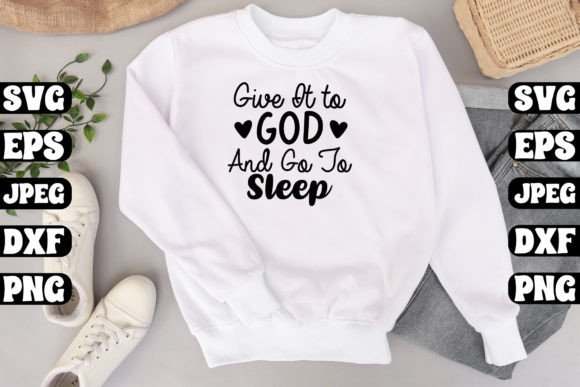
Give It to God and Go to Sleep: A Designer Review
As a designer who has spent years navigating the intersection of digital assets and physical thread, I approach every new machine embroidery design with a critical eye. We are not just looking at pixels; we are visualizing how that image translates into stitches on fabric. Today, I am evaluating a specific asset titled Give It to God and Go to Sleep. At first glance, this phrase carries a profound sense of relief and surrender, making it an emotionally resonant choice for home decor or personal apparel. But does it hold up under the scrutiny of a real-world embroidery project? Let’s dive into the practicalities of turning this Graphics file into a tangible product.
The Visual Weight and Emotional Resonance
When I first opened the preview for Give It to God and Go to Sleep, the mood was immediately clear. The typography is bold yet comforting, suggesting a design that works best when it is legible from a distance. In the world of custom apparel and handmade products, clarity is king. This design avoids overly ornate flourishes that can get lost in a dense fill stitch pattern. Instead, it relies on strong letterforms that promise to stand out against various fabric textures.
For a small business owner or an Etsy seller, this kind of message is a goldmine. It speaks directly to the current cultural need for peace and rest. Imagine placing this text on a heavyweight cotton tote bag or the chest of a cozy fleece sweatshirt. The simplicity of the phrase allows the stitching quality to shine without fighting against complex details. However, the success of the final piece depends entirely on how well the embroidery file handles the curves and corners of the letters during digitization.
Testing the Design in Real Scenarios
To truly understand the potential of Give It to God and Go to Sleep, I simulated its use in a few specific scenarios. First, consider a kitchen towel or an apron for a boutique shop. These items are functional but often serve as conversation starters. The text fits perfectly across the hem of a tea towel, creating a charming, personalized touch that feels both professional and heartfelt. The running stitch or a light satin stitch border around the letters could add definition without overwhelming the soft texture of the linen or cotton.
Next, let's look at baby embroidery. While the message is spiritual, it is also deeply comforting for parents. A onesie or a nursery pillow cover featuring this phrase could be a cherished gift. Here, the challenge lies in the hoop size. If you are working with a small hoop, you must ensure the text remains readable. If the letters become too small, the stitch density might cause puckering on delicate baby fabrics. Always test your design on scrap fabric first to verify that the thread tension holds up on stretchy materials.
For those running a craft business focused on holiday gifts, this design offers versatility. A personalized gift like a throw pillow or a blanket corner patch can carry this message beautifully. The key is to pair it with the right thread colors. On a dark background, a cream or soft white thread creates a high-contrast, elegant look. On lighter fabrics, a deep navy or charcoal adds sophistication. The goal is to make the text pop so that the sentiment is instantly recognized by the buyer.
Navigating Technical Challenges and Fabric Choices
While the concept is strong, there are technical pitfalls to avoid when using Give It to God and Go to Sleep. One major consideration is the type of fabric. On textured fabrics like canvas or heavy denim, the design will likely look rugged and durable. However, on thin or highly stretchy fabrics, such as jersey knit t-shirts, you must use a proper stabilizer. Without adequate backing, the tension from the needle can distort the letters, ruining the clean lines of the typography.
Another area of caution is the application on curved surfaces, such as caps or hats. Embroidery on a cap requires precise digitization to follow the curve without bunching. If the design includes tight corners in the lettering, these areas are prone to breaking threads or looking jagged if the stitch density is too high. Before committing to a batch of commercial embroidery projects, always run a test on a similar material to check for any skipped stitches or registration issues.
Furthermore, think about the longevity of the product. Items like kitchen towels and baby clothes undergo frequent washing. Ensure that the finished product uses high-quality thread that resists fading. A design that looks perfect on day one but frays after three washes will damage your brand reputation. As a reviewer, I recommend checking the back of the stitched sample to ensure there is minimal loose thread, which indicates good digitization and machine setup.
Business Value and Commercial Application
From a commercial standpoint, Give It to God and Go to Sleep is a versatile asset for small shop merchandise. It bridges the gap between faith-based messaging and general self-care, broadening your potential customer base. When listing this item online, a printable mockup showing the design on a realistic sweatshirt or tote bag can significantly boost buyer engagement. Customers want to see exactly how the text sits on the garment before they purchase.
However, remember that while this specific product listing mentions formats like SVG, DXF, PNG, EPS, and PDF compatible with cutting machines like Cricut and Silhouette, we are discussing its use in embroidery. If you intend to use this as a digital embroidery file, you must confirm that the vector paths translate correctly into stitch data. Not all graphics files are created equal for sewing machines. If you are purchasing this as part of a Freebies collection, always review the licensing terms. Can you sell the finished embroidered items? Can you modify the design? Understanding these rules is crucial for maintaining professionalism and avoiding legal issues in your craft business.
Final Thoughts for the Maker
In conclusion, Give It to God and Go to Sleep is a powerful design concept that, when executed correctly, adds significant value to any handmade project. Its strength lies in its simplicity and emotional impact. Whether you are creating a tote bag design for a craft fair, a custom patch for a local church group, or a unique holiday embroidery gift, this phrase has the potential to resonate deeply with buyers.
My advice to fellow designers and makers is to treat this asset with care. Test your hoop size, choose your stabilizers wisely, and pay attention to the interplay between thread colors and fabric backgrounds. By taking the time to refine the execution, you transform a simple graphic into a high-quality, professional finished product that customers will love and cherish. This is how you build trust and establish your brand as a leader in the world of design assets and handmade goods.