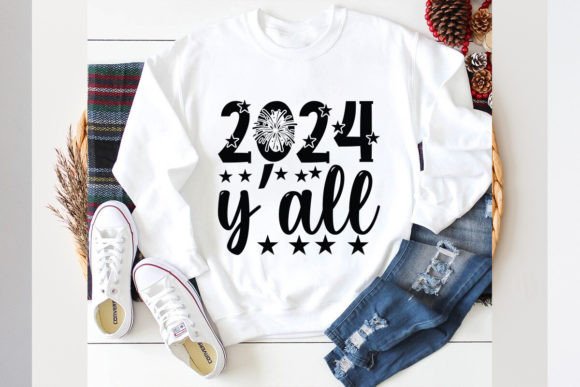
2024 Y all: A Designer's Review for Embroidery Projects
As a designer who spends more time at the machine than anywhere else, I approach every new asset with a critical eye. When I first encountered 2024 Y all., my initial reaction was curiosity mixed with caution. The product description lists it as a "Happy New Year SVG T-shirt design" and part of a trendy bundle including PNGs and EPS files. While the listing clearly targets print-on-demand (POD) sellers with high-resolution raster graphics, the real question for us in the embroidery community is whether this digital graphic can translate into a successful machine embroidery design. Does the bold typography and celebratory theme hold up when converted from pixels to thread?
First Impressions: Visual Impact and Mood
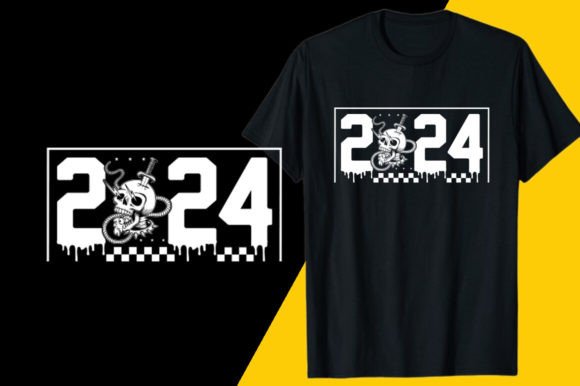
The visual personality of 2024 Y all. is undeniably festive and modern. The layout suggests a clean, impactful statement perfect for ringing in the new year. In its native format, the design offers a strong contrast between the text elements and the background, which is promising for embroidery. However, when evaluating a digital embroidery file or converting a graphic for stitching, we must look beyond the screen. The mood is energetic and optimistic, making it an ideal candidate for holiday-themed merchandise or end-of-year promotional items.
For a small shop owner or an Etsy seller looking to launch a last-minute holiday collection, the aesthetic appeal is there. The simplicity of the phrase allows for creative interpretation. If you are planning a custom apparel line, this design could serve as a focal point on a sweatshirt or a tote bag. The challenge lies in maintaining that crispness once the needle hits the fabric. The "trendy" nature of the font style means that if the stitch conversion isn't handled perfectly, the edges can become jagged, losing the professional polish required for a high-end finished product.
Real-World Application: From Screen to Stitch
Let's walk through a realistic scenario. Imagine you are preparing a custom embroidered tote bag for a local craft fair. You want to offer a limited edition "Happy New Year" item. You select 2024 Y all. as your base graphic. Because the original file is an SVG and PNG intended for printing, you cannot simply load it into your embroidery software. You would need to digitize it or use a third-party service to convert the vector paths into a usable embroidery file.
Once converted, how does it perform? On a sturdy canvas tote bag, the bold lettering of "2024" and "Y all" works well. The large characters allow for a generous fill stitch without becoming too dense, ensuring the fabric doesn't pucker. However, if you were attempting this on a delicate baby onesie, the story changes. The thickness of the lines in the original graphic might require a heavy stitch density that could overwhelm thin cotton. This is where practical judgment comes in. For baby embroidery, you would likely need to reduce the overall size significantly and perhaps switch some fill areas to a lighter running stitch or satin border to maintain softness.
Consider also the application on a baseball cap. The curved surface of a cap requires specific digitizing techniques to prevent distortion. If the design includes any tight corners or intricate details within the lettering, those areas are prone to breaking down on a curve. In my experience, simpler, bolder designs like 2024 Y all. tend to fare better on caps than overly complex illustrations, provided the digitizer respects the curvature of the hoop.
Evaluating Fabric and Texture Challenges
Fabric texture plays a massive role in the success of any embroidery project. The design's clean lines look great on smooth cotton twill, but what about textured fleece or knit fabrics? On a heavy sweatshirt, the loft of the fabric can cause the threads to sink slightly, potentially obscuring smaller details. Since 2024 Y all. relies heavily on typography, legibility is paramount. If the design is too small, the gaps between letters might close up due to the fabric's pile.
Furthermore, dark fabrics present a unique challenge. The product description mentions "3 Black" PNG options, which implies a focus on dark backgrounds. In embroidery, stitching white or light-colored thread over black fabric requires excellent coverage. If the thread colors chosen do not have enough opacity or if the backing stabilizer is insufficient, the black fabric will show through, making the design look muddy. Always test your color combinations on a scrap piece of the actual fabric you intend to use.
Strategic Use for Craft Businesses and Sellers
For the Etsy seller or craft business owner, timing and presentation are everything. Using 2024 Y all. as a centerpiece for a holiday gift set can drive significant engagement. Whether it's a personalized apron for a home cook or a decorative pillow cover for a living room refresh, the design carries a universal message that resonates with buyers looking for seasonal decor.
However, you must be mindful of the "Freebies" category often associated with such bundles. Just because a design is available as a freebie or low-cost graphic does not mean it is ready for commercial embroidery without modification. As a professional, I advise checking the licensing terms rigorously. Can you sell the physical handmade product? Can you sell the digitized file itself? Most POD bundles restrict the sale of the digital file, allowing only the sale of finished goods. Misunderstanding these terms can lead to account suspensions on platforms like Etsy.
To maximize value, consider using printable mockups to showcase how the design looks on various garments before committing to production. This helps potential customers visualize the final result, increasing trust and buyer engagement. A well-presented mockup of 2024 Y all. on a cozy sweater can convey warmth and quality, distinguishing your brand from generic competitors.
Practical Designer Notes for Success
If you decide to move forward with this design, here are my essential recommendations for ensuring a professional outcome:
- Test on Scrap Fabric First: Never skip this step. Run a test on the exact material you plan to use to check for puckering, thread breakage, or registration issues.
- Check Thread Color Contrast: Ensure the thread stands out against the fabric. High contrast improves readability and visual impact.
- Review Stitch Density: If you are digitizing the SVG yourself, avoid over-stitching. Too much fill can make the garment stiff and uncomfortable.
- Confirm Hoop Size: Verify that the design fits comfortably within your hoop without stretching the fabric excessively. If the design is too large for your machine, consider splitting it into sections.
- Inspect Small Details: Zoom in on the digitized file. Are the tiny serifs or curves of the letters clear? If they are too fine, simplify them to prevent thread jams.
- Use Proper Stabilizer: The right stabilizer is non-negotiable. For stretchy knits, use a cut-away stabilizer; for woven fabrics, a tear-away may suffice.
- Compare Light and Dark Backgrounds: Test how the design appears on both light and dark fabrics to ensure versatility in your product line.
- Verify Licensing: Double-check the terms of the Graphics bundle. Ensure you have the right to use the design for commercial embroidery projects.
In conclusion, 2024 Y all. holds significant potential for the savvy embroiderer willing to put in the extra work of proper digitization and testing. It captures the spirit of the season and offers a versatile canvas for creativity. By respecting the limitations of thread and fabric, and by applying professional standards to the execution, you can transform this simple graphic into a high-quality, marketable commercial embroidery asset. Whether for a personal gift or a boutique product, the key lies in the details—the stitch count, the tension, and the care taken to bring the design to life.